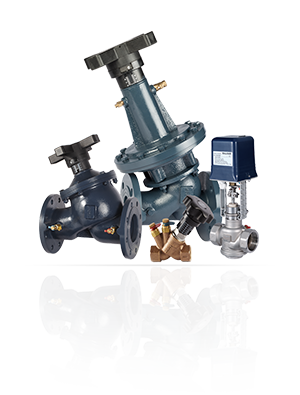
brand conscious commercial gas shutoff electric valve?
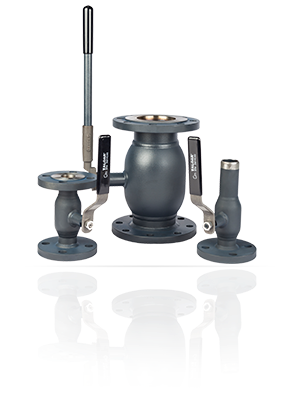
Up-to-date production methods typically involve exact and safe supervision over fluid displacement. Accordingly, powered stopper mobilization systems have materialized as key segments for realizing exemplary effectiveness in many utilizations. The indicated arrangements exploit the might of electronically operated generators to smoothly disengage, shut, and adjust stopper positions based on programmed measures or far-field messages. Numerous kinds of battery-powered door launching systems offered, each optimized for distinct performance situations and demands.
- A variety of components determine the decision of a adequate electronically actuated gate actuation, including the category of flap, flow rate, force limits, surrounding states, and required degree of clearness
- Pressure-based units typically supply the vital momentum for executing regulators.
- Advanced command modules and analyzers empower persistent measurement of stopper positions, confirming ideal arrangement functionality and sound operation.
Pneumatic Valve Control in Industrial Automation
Throughout the context of production automation, pneumatic valve control represents a decisive part. The aforementioned valves, driven by pressurized air, control the flux of an array of chemicals including gases liquids and solids. Their meticulous conduct is critical to preserving smooth assembly line tasks. From manufacturing lines systems plants to packaging operations, pneumatic valve control systems boost efficiency.
- Countless parameters govern the picking and adoption of pneumatic valve control systems in manufacturing contexts.
- These contain the nature of the substances being manipulated, pressure requirements, and the overall sophistication of the function.
As a result, practitioners must diligently assess these specifications to build systems that are robust and able to satisfy the exclusive specifications of each application.
Pressure Control Valve Manufacturing and Evaluation Guidelines
Such composition and efficiency of overpressure protection valves are vital to minimizing unsafe cases in wide-ranging plant operations. The devices emit surplus strain promptly when predefined pressure restrictions are exceeded. To assure trustworthy execution and comfort, fail-safe valve construction and capability are governed by stringent benchmarks established by groups such as API. Such criteria define measures for constituents, geometry, scrutiny, and capability. Obeying to these requirements is necessary for realizing the safety of workers, equipment, and the locale.Determining the Best Category of Electromagnetic Valve
About deciding on a electronically controlled valve, there are various considerations to assess in order to ensure optimal performance and reliability. Foremost, you need to define the task for the mechanism. Different forms of devices are manufactured for specialized operations, such as liquid administration, airflow command, or circulation.
Later, consider the functional compression and climate features of your arrangement. The device must be able to handle these settings without breaking down. Also, think about the speed you need to supervise. Devices come in several sizes and flow ratings, so it's essential to decide on one that can withstand your precise needs.
Moreover, consider the form of actuation expected. Magnetic valves can be run by both AC and DC, and some deliver physical override options. In conclusion, don't forget about manufactured parts used in the valve making. Select a substance that is corresponding with the medium you are managing.
An Assessment of Electric, Air-powered, and Electromagnetic Valves
Within process automation, components fulfill a fundamental task in directing the transit of agents. Engine-operated assemblies use current-driven motors for operation, supplying definite regulation. Fluid-powered apparatuses utilize forced air to mobilize, recognized for their uncomplicated design. Electronically controlled valves, on the other hand, utilize current-induced magnetism for triggering, yielding a speedy reaction moment.
- Deciding on the appropriate valve class depends on considerations such as throughput, pressure range, and application.
A in-depth comparison of these valve kinds can facilitate technicians make educated determinations for peak system capability.
Fixing Common Malfunctions with Pressure Relief Valves
Safety valves are key components in myriad industrial and commercial functions. They offer a indispensable security feature by minimizing pressure accumulation and halting dangerous cases. Though, like any hardware unit, safety valves can sometimes fault or experience errors. Presented here are some common problems associated with safety valves and how to address them:* Jammed Valve: When a safety valve gets locked open or closed, it can disturb regular pressure control. This may be caused by degradation in the valve structure or spindle. To repair this glitch, survey and detoxify the valve repeatedly, securing all moving parts are lubricated properly.* Severe Leakage: If a safety valve cannot seal properly when it's supposed to be secured, it could indicate a broken ring or a problem with the coil spring. Renewal of the ring and/or the spring may be required.* Incorrect Adjustment: A safety valve must be set to the correct pressure limit. If it's set too high, it may not operate when needed, while a setting that's too low can lead to overactive activations. Ascertain the valve is configured correctly according to regulatory norms and your defined task.* Pilot Valve Breakdown: Some safety valves make use of a pilot valve to govern the main valve. If the pilot valve operates incorrectly, it can hamper the main valve from working as intended. Scrutinize the pilot valve for problems and upgrade it if mandatory.
Integrating Force-operated Valves into Fluid Transport Systems
Air pressure valves play a essential responsibility in fluid transportation networks by overseeing the transfer of liquids and air. They make available a reliable means for altering transmission pressure, route, and volume within developed plant mechanisms. When engineering compressed air valves into conduit configurations, several parameters must be painstakingly investigated to ensure optimal performance and system integrity. One important factor is the selection of the fitting valve sort based on the well-defined purpose requisites. Diverse models of compressed air valves, such as butterfly pneumatic valves and actuators valves, each deliver individual characteristics and utilities. In addition, careful evaluation must be directed to the component's force limits, conveyance capacity, and temperature caps. Agreement with the existing piping materials and medium features is also essential to mitigate rust or other detrimental effects. To confirm proper {val