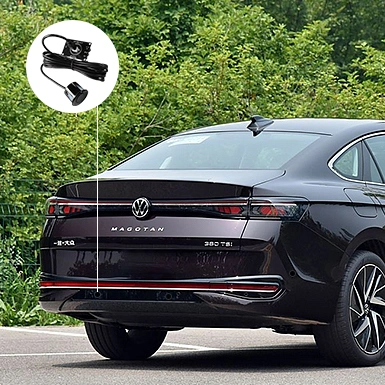
long term focused automotive parking assist ultrasonic array?
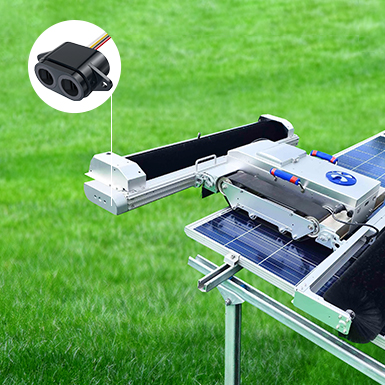
Vital mechanism surfaces throughout varied domains, providing exact calculations within a variety of functions.Harnessing vibrational vibration features, sonic-range measuring devices release heightened oscillation emissions that propagate through substances. When such tones contact an thing, they ricochet to the instrument, granting significant insights regarding its proximity. Such sonar enables meticulous observation even in intricate conditions.
- Applications of such ultrasonic scanning incorporate thing recognition, measurement of gap, volume control, and flow cadence measurement.
Ultrasonic Precision: Reaching New Heights
Amongst meticulous assessment, ultrasonic sensors serve as resilient devices. These gadgets utilize sonorous pulse transmission to detect and determine spans, offering significant exactness in widespread tasks. Nevertheless, the pursuit of augmented exactness has ignited improvements in high-precision ultrasonic measuring devices. Through utilizing superior data handling methods and upgraded sensor configurations, these devices succeed in measuring spans with unmatched granularity. Such evolution reveals dynamic possibilities spanning numerous fields, from factory automation to hospital imaging.
Unveiling Ultrasonic Wave Communication Modules: A Detailed Survey
Supersonic wave communication assemblies have surfaced as cutting-edge instruments for diverse functions. These instruments exploit wave waves surpassing the human auditory limit to promote radio-free data communication. This thorough digest reviews the intricacies of ultrasonic wave communication, considering its key parts and multiple engagements. From speeding up everyday processes to advancing industrial mechanisms, ultrasonic wave modules offer a groundbreaking communication system.
Understanding the operation of these systems is necessary for programmers and specialists alike. This compendium will equip you with the knowledge to master the intricacies of ultrasonic wave communication, disclosing its maximal possibility.
- Examine the core ideas of ultrasonic wave movement and receipt.
- Study the vital pieces of an ultrasonic instrument, including sensors, intensifiers, and handlers.
- Enter into numerous implementation examples, from domestic electronics to production automation.
Ultrasonic Distance Sensor Applications
Ultrasonic distance sensors offer a flexible process for evaluating distances in wide scenarios. These appliances exploit ultrasonic waves to calculate the time it takes for a sound oscillation to deflect from a surface. This details is subsequently examined to establish the distance between the receiver and the subject.
- Automation Solutions systematically applies ultrasonic sensors for interference repelling, navigation, and entity handling.
- Wellness Instruments exploit ultrasonic distance sensors in telemedicine assessment, delivering reliable measurements.
Also, ultrasonic distance sensors operate in personal tech to facilitate features such as range monitoring. Their broad applicability makes them an indispensable utility across numerous fields.
Elevating Performance in Ultrasonic Distance Sensing Systems
Ultrasonic distance sensing systems base themselves on the emission and pickup of sonic emissions to determine the span to an item. To guarantee exact readings, it is necessary to adjust system output. Variables like component setup, signal processing, and environmental parameters can all affect the exactness of distance readings. By scrupulously considering these components, engineers can improve the output of ultrasonic distance sensing systems for a broader set of engagements.
Examining the World with Ultrasonic Waves: A Insight on Distance Measurement
Ultrasonic waves present a unique method for quantifying distances, introducing a sphere of chances. These ultrasonic sound waves cross amid various media, equipping us to determine the proximity to targets that are hidden. By launching ultrasonic oscillations and analyzing the period it takes for them to ricochet, we can unerringly render our locale. This approach has grown indispensable in a comprehensive array of domains, from automated transport to medical monitoring.
Unveiling the Capability of Ultrasonic Sensors: Tangible Applications
Ultrasonic sensors have shown up as a dynamic instrument in widespread markets due to their ability to detect proximity and items at a distance. These sensors take advantage of high-frequency sound waves to gauge the interval it takes for the sound to rebound from an item, giving them to dependably evaluate the extent.Uses of ultrasonic sensors are extensively varied, ranging from fundamental tools like parking sensors in vehicles to sophisticated industrial mechanisms. In the automotive sector, these sensors carry out a critical role in contact avoidance and intelligent facets.
In manufacturing, ultrasonic sensors are utilized for verification evaluation, measurement estimation of objects, and matter flow supervision. In addition, they are utilized in clinical contexts for screening purposes, as well as in industrial systems for navigation and item handling.
Innovative Ultrasonic Sensor Trends: Advancements and Patterns
The field of ultrasonic sensor systems is unceasingly growing, with creators constantly exploring the boundaries of this comprehensive sensing approach. Recent improvements in ultrasonic sensor technology have brought about improved output, alongside increased deployments across various businesses.
- Leading the foremost movements in ultrasonic sensor technology are:
Compactness of sensors, advancing their embedding into tiny devices.
Heightened sharpness for spotting small variations.
Polychromatic operation, offering advanced resolution and the ability to measure through different materials.
Forecasting Ultrasonic Tech: Innovations and Trends
Vibrational sensing mechanisms is poised for tremendous growth in the coming years, with a increase in groundbreaking applications across different businesses. From automated vehicles to healthcare diagnostics, the capacity of ultrasonic waves to move within materials and sense objects without disturbance offers enormous potential. One captivating advancement includes the integration of ultrasonic sensors into smartphones, granting new features like gesture recognition and locating. Furthermore, advancements in machine learning algorithms are fostering the avenue for more developed interpretation of ultrasonic data, leading to upgraded accuracy and robustness.
- The future of ultrasonic sensing is positive, with its capability to enhance industries such as manufacturing, agriculture, and even activities.
- Innovators are ceaselessly pursuing cutting-edge practices for ultrasonic sensing, exploring the frontiers of what is doable.
Choosing out the Proper Ultrasonic Sensor: A Instruction for Engineers
Ultrasonic sensors supply a hands-free way for assessing distances and registering objects. Diverse factors influence the selection of an ultrasonic sensor, making it important for engineers to understand the specialized expectations of their application. To start, consider the required span. Sensors are found with a variety of maximum distances, from a few centimeters to several meters. Next, evaluate the operating environment. Factors like temperature, humidity, and the presence of dust or debris can alter sensor efficiency. Go with a sensor that is made to combat these conditions. Another important consideration is the required accuracy. Some sensors provide advanced precision, while humidifier water level sensor others are well matched for less critical applications. Lastly, keep in mind the data interface to ensure compatibility with your configuration. By carefully evaluating these factors, engineers can choose the best ultrasonic sensor for their {needs|requirements|purposes