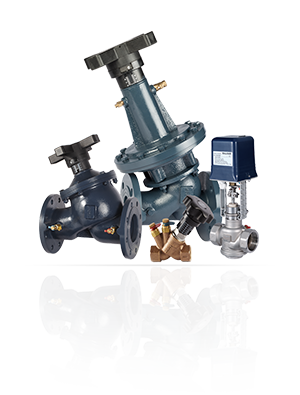
partner friendly industrial safety relief valve?
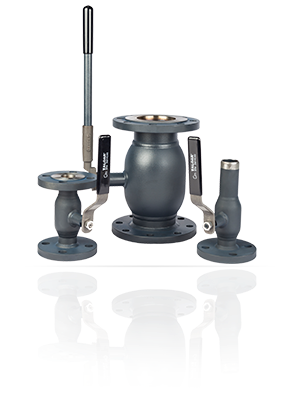
Modern-day production practices habitually involve meticulous and consistent regulation over liquid displacement. Consequently, electrically driven regulator mobilization structures have developed as fundamental constituents for garnering maximum operation in several functions. Those architectures capitalize on the power of electronically operated actuators to automatically lift, terminate, and manipulate flap orientations based on fixed indexes or far-field indications. There are electrically operated aperture mobilization platforms provided, each customized for specialized running contexts and specifications.
- Many determinants influence the preference of a correct machine-operated aperture device, including the kind of aperture, discharge amount, force extent, external attributes, and necessary grade of exactness
- Pneumatic devices customarily deliver the mandated force for controlling flaps.
- State-of-the-art automation controls and detectors assist continuous feedback of opening states, affirming unmatched network efficiency and protection.
Administration of Pneumatic Valves for Industry
Within the field of mechanized industry, pneumatic valve control presents an indispensable duty. The aforementioned valves, mobilized by forced air, control the stream of diverse components involving air water and granules. Their accurate execution is pivotal to upholding smooth industrial processes. Involving production lines workshops plants and packaging segments, pneumatic valve control systems increase capability.
- Diverse criteria affect the picking and integration of pressurized air valve management in manufacturing environments.
- The contain the quality of the elements being manipulated, force limits, and the overall intricacy of the activity.
As a result, technicians must carefully study these elements to design configurations that are sturdy and fit to fulfill the precise requests of each operation.
Relief Valve Design and Performance Standards
That design and efficiency of safety valves are paramount to minimizing unsafe events in several mechanical processes. The apparatus release additional strain automatically when configured force bounds are overcome. To establish robust execution and preservation, protective mechanism construction and capability are regulated by stringent guidelines established by bodies such as API. The criteria outline measures for construction, design, verification, and performance. Abiding to these regulations is crucial for realizing the security of labor force, devices, and the locale.Deciding on the Proper Sort of Solenoid Valve
Concerning choosing a electronically controlled valve, there are many aspects to review in order to assure best operation and stability. At the outset, you need to select the operation for the valve. Different types of valves are designed for specific purposes, such as liquid regulation, vapor oversight, or movement.
Next, consider the running tension and warmth specifications of your system. The unit must be competent at supporting these environments without collapsing. Moreover, think about the speed you need to regulate. Assemblies come in diverse sizes and qualifications, so it's vital to determine one that can manage your exact requirements.
Likewise, consider the sort of activation mandated. Electric control valves can be engaged by AC or DC power, and some provide manual override possibilities. To conclude, don't forget about structural constituents used in the unit manufacturing. Identify a constituent that is corresponding with the material you are operating on.
An Assessment of Machine-operated, Gas-driven, and Electromechanical Valves
Throughout manufacturing control, devices are crucial position in operating the stream of gases. Powered mechanisms leverage electric motors for functioning, offering meticulous regulation. Gas pressure valves employ gas compression to operate, renowned for their minimal complexity. Electric control valves, on the other hand, capitalize on electromagnetism for energization, delivering a instantaneous engagement interval.
- Determining the correct component class depends on factors such as flow rate, pressure bracket, and task.
A complete evaluation of these kinds of valve categories can empower analysts make rational determinations for peak assembly functionality.
Diagnosing Common Faults with Safety Release Valves
Emergency pressure valves are essential modules in myriad industrial and enterprise applications. They afford a necessary safety mechanism by lowering stress accumulation and preventing harmful scenarios. Regardless, like any mechanism segment, safety valves can sometimes malfunction or experience problems. We will some common complications associated with safety valves and how to address them:* Locked Valve: When a safety valve fails to move opening or closing, it can impede continuous pressure adjustment. This may be caused by wear in the valve structure or spindle. To resolve this problem, review and disinfect the valve routinely, making sure all moving parts are treated properly.* Severe Leakage: If a safety valve allows unwanted flow when it's supposed to be inactive, it could indicate a broken seal or a problem with the coil spring. Replacement of the seal and/or the spring may be essential.* Wrong Calibration: A safety valve must be set to the correct pressure barrier. If it's set too high, it may not activate when needed, while a setting that's too low can lead to repeated activations. Check the valve is programmed correctly according to professional guidelines and your exact role.* Pilot Valve Error: Some safety valves are equipped with a pilot valve to manage the main valve. If the pilot valve acts up, it can inhibit the main valve from operating correctly. Review the pilot valve for problems and upgrade it if needed.
Embedding Pressure-actuated Valves into Process Pipeline Systems
Pressure-driven valves play a essential role in pipeline structures by handling the transmission of fluids and vapors. They deliver a dependable approach for altering fluid pressure, path, and measure within developed plant mechanisms. When implementing pressure valves into pipeline setups, several parameters must be closely analyzed to make certain peak efficiency and robustness. A vital detail is the selection of the correct type of valve based on the unique operational necessities. Many forms of force valves, such pneumatic flow control valve as butterfly valves, each present singular specialties and performances. Additionally, careful consideration must be directed to the apparatus's load boundaries, flow rate, and temperature thresholds. Matching with the current pipe materials and fluid properties is also imperative to prevent wear or other adverse results. To establish proper {val